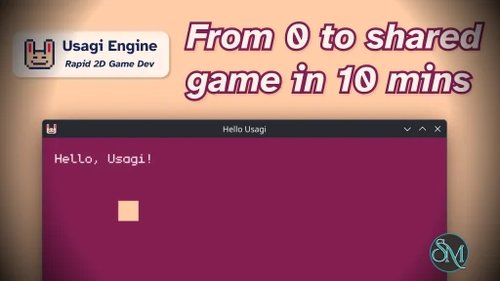



Usagi Engine is a lightweight game development engine designed for creating 2D and 3D games with an emphasis on performance and developer control.
The engine is generally discussed within indie and experimental development circles rather than mainstream commercial game development ecosystems.
Usagi Engine prioritizes a modular architecture and streamlined workflow instead of massive integrated marketplaces or enterprise tooling systems.
Usagi Engine is an independent game engine project aimed at developers who prefer lightweight tooling, clean architecture, and direct control over the game development process. Unlike massive commercial engines that prioritize all in one ecosystems, Usagi Engine focuses more on flexibility, low level performance, and minimal overhead.
Although still relatively niche compared to major engines, it has attracted curiosity among indie developers and engine programming enthusiasts looking for alternatives to increasingly heavy mainstream game engines.
Key Features of Usagi Engine
Lightweight Architecture
Usagi Engine focuses on keeping the engine relatively lean compared to larger commercial competitors, helping reduce unnecessary overhead.2D and 3D Rendering Support
The engine supports both 2D and 3D game development workflows depending on the project configuration and rendering systems used.Developer Oriented Design
Usagi Engine appears targeted toward programmers and technical users who prefer direct engine level control instead of highly abstracted visual scripting systems.Performance Focused Workflow
The project emphasizes efficiency and responsiveness, which can appeal to developers working on optimized or experimental projects.Modular Structure
The engine architecture allows developers to adapt and extend systems rather than relying entirely on fixed workflows.
Download Usagi Engine v1.3.3 - Software Mirrors |
|---|
Usagi Engine v1.3.3 for Windows |
Usagi Engine v1.3.3 for macOS |
Usagi Engine v1.3.3 for Linux |
Others Download related to Usagi Engine v1.3.3 |
Usagi Engine v1.3.3 Source Code |
Usagi Engine v1.3.3 Release Notes:Usagi v1.3.3 contains an important bug fix where gamepad input broke on web builds in v1.3.0. Get the latest by runningusagi update, downloading the executable, or updating via the Homebrew package manager. Don't forget to usagi refresh to get the latest docs and Lua function signatures.
Thanks to @bruh0987 (curbs) for all of the fixes and additions in this release!
Features:
|
User Experience
Usagi Engine feels more like a technical developer platform than a beginner friendly drag and drop game creation tool.
Developers with programming experience will likely appreciate the cleaner architecture and reduced complexity compared to extremely large engines.
However, beginners may find the ecosystem difficult due to limited tutorials, smaller community support, and fewer ready made assets compared to engines like Unity or Unreal Engine.
The experience depends heavily on the developer’s comfort level with engine programming concepts.
Performance and Compatibility
Lightweight engines often perform well because they avoid many background systems and enterprise scale integrations found in larger engines.
Usagi Engine’s smaller footprint can make iteration faster and resource usage lower, especially for indie scale projects.
That said, niche engines frequently face limitations in tooling maturity, third party integrations, platform support, and documentation quality compared to industry dominant engines.
Community and Ecosystem
One challenge for Usagi Engine is ecosystem size.
Large engines benefit from enormous marketplaces, plugin libraries, tutorial ecosystems, and community troubleshooting resources. Smaller engines naturally struggle to compete in those areas.
Still, some developers specifically prefer smaller projects because they allow greater transparency, customization, and technical understanding of the engine internals.
Pros
Lightweight and performance focused
Cleaner architecture than many large engines
Flexible and modular design
Good for technical developers
Lower system overhead
Cons
Much smaller community ecosystem
Limited tutorials and learning resources
Less mature tooling compared to major engines
Not beginner friendly
Fewer plugins and ready made assets
Usagi Engine is best suited for experienced programmers, experimental developers, engine enthusiasts, and indie creators who prefer lightweight development environments with greater low level control.
Beginners or teams requiring large production ecosystems may be better served by more established engines.
Usagi Engine offers an interesting alternative approach to modern game development with its lightweight architecture and developer focused philosophy. While it lacks the ecosystem strength and maturity of mainstream engines, it remains an appealing option for technical users seeking simplicity, flexibility, and performance oriented workflows.